

The best travel agency website design is no longer just about attractive visuals. It is about creating a platform that builds trust, communicates value clearly, and converts visitors into bookings. Over the past few years, the travel industry has shifted heavily toward digital decision-making, with most travelers researching destinations, prices, and experiences online before contacting an agent. This shift means your travel agency website has become your most powerful marketing and sales asset.
For travel businesses in the United States, competition is especially strong. Agencies that invest in modern, high-performing travel agency website design USA consistently generate more inquiries, attract higher-value clients, and strengthen long-term brand credibility. On the other hand, outdated or poorly optimized websites quietly push potential customers toward competitors. A professionally built travel website design can make the difference between steady growth and missed opportunities.
This complete guide explains everything travel business owners need to know about travel agency website design, including features, costs, examples, and strategies that increase bookings in 2026.
Why Travel Agency Website Design Matters More Than Ever
A professional travel website does more than look good. It influences whether visitors trust your brand enough to book with you. Travel agency website design is no longer just about appearance. It directly affects how potential clients perceive your business, how easily they find your services online, and whether they feel confident enough to make a booking. In today’s competitive market, especially for agencies targeting travelers in the USA, a modern, fast, and mobile-optimized travel website design helps build credibility, improve search visibility, and increase inquiries. What this really means is simple: the quality of your travel agency website can determine whether a visitor becomes a customer or leaves for a competitor.
Your website affects:
- Customer trust and credibility
- Conversion rates and bookings
- Lead generation quality
- Search engine visibility
- Brand positioning
- Marketing performance
In many cases, a well-designed website can double or triple booking inquiries without increasing advertising costs.
Travel agencies that treat their website as a revenue asset consistently outperform competitors.
What Makes a Great Travel Agency Website
Not all travel websites are equal. High-performing websites share specific characteristics that drive engagement and conversions. A great travel agency website goes beyond attractive visuals. It combines strategic design, user-friendly navigation, and conversion-focused elements to guide visitors toward booking decisions. High-performing travel agency website design typically includes clear messaging, inspiring destination imagery, fast loading speed, mobile responsiveness, and strong trust signals like reviews and testimonials. When these elements work together, a professional travel website not only engages users but also increases inquiries, builds credibility, and drives consistent business growth.
1. Clear Value Proposition
Visitors should immediately understand:
- What you offer
- Who you serve
- Why you are different
- How you help customers
Confusing messaging kills conversions faster than poor design.
2. Visual Destination Appeal
Travel is emotional. People buy experiences, not services.
High-quality visuals, destination photography, and immersive layouts help users imagine their future trip.
3. Easy Navigation
Visitors should find information within seconds.
Essential navigation sections include:
- Destinations
- Packages
- About
- Blog or resources
- Contact or consultation
- Booking options
Complex menus reduce engagement.
4. Mobile Optimization
Over 65 percent of travel searches happen on mobile devices.
A mobile-first design is not optional anymore. It is critical.
5. Fast Loading Speed
Slow websites increase bounce rates and reduce Google rankings.
Speed optimization directly impacts revenue.
6. Trust Signals
Trust elements increase booking confidence:
- Customer reviews
- Certifications
- Partnerships
- Testimonials
- Awards
- Real client photos
- Secure payment badges
Trust equals conversions.
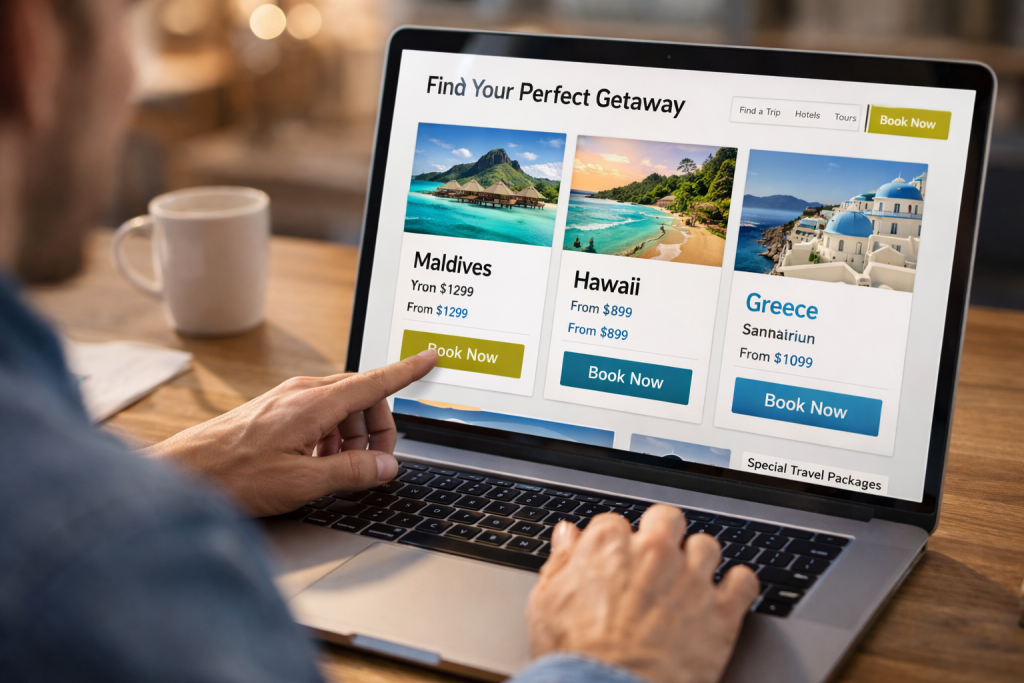
Essential Features Every Travel Agency Website Should Include
A strong travel agency website design USA must reflect the expectations of modern American travelers while supporting business growth for agencies operating in a competitive market. This means creating a fast, mobile-optimized, and visually engaging travel agency website that clearly showcases destinations, packages, and booking options. In the USA, customers often compare multiple agencies before choosing, so a professional travel website design with trust signals, easy navigation, and clear calls to action can significantly increase inquiries and conversions. When done correctly, a travel agency website design in the USA becomes a powerful marketing asset that attracts qualified leads and turns visitors into loyal clients.
Key features include:
Booking and Inquiry System
Options include:
- Online booking engine
- Quote request forms
- Consultation scheduling
- Package inquiry forms
Destination Pages
Each destination should have dedicated pages with:
- Highlights
- Packages
- Pricing ranges
- Photos
- Travel tips
- FAQs
These pages also help SEO.
Package Listings
Well-structured package pages increase bookings significantly.
Include:
- Pricing
- Itinerary
- Inclusions
- Exclusions
- Testimonials
- Availability
- CTA buttons
Blog and Content Marketing
Content improves search visibility and authority.
Topics may include:
- Travel tips
- Destination guides
- Visa information
- Travel planning advice
- Seasonal travel recommendations
Lead Capture Elements
Examples:
- Newsletter forms
- Free consultation offers
- Downloadable guides
- Travel planning checklists
Lead generation supports long-term growth.
Travel Agency Website Design Trends for 2026
Travel Agency Website Design Trends for 2026 are shaping how agencies attract and convert customers in an increasingly digital market. A modern travel agency website design now focuses on personalization, mobile-first performance, immersive visuals, and seamless booking experiences that match user expectations. As competition grows, agencies adopting innovative travel website design trends such as AI chat support, interactive destination exploration, and fast-loading interfaces gain a clear advantage in visibility and customer engagement. Staying aligned with these travel agency website trends for 2026 helps businesses build trust, improve conversions, and remain competitive in the evolving travel industry.
Major trends include:
Personalized User Experiences
Websites now adapt content based on:
- User location
- Interests
- Past browsing behavior
- Search patterns
Personalization increases engagement.
Interactive Destination Exploration
Interactive maps and dynamic content help users explore destinations visually.
Video Integration
Video storytelling dramatically increases emotional connection and conversion rates.
AI Chat Assistants
Smart chat systems answer questions instantly and capture leads automatically.
Minimalist Clean Layouts
Modern designs focus on simplicity, clarity, and whitespace.
Cluttered websites feel outdated and untrustworthy.
Best Platform Options for Travel Agency Websites
Choosing the right platform depends on your business goals, budget, and scalability needs.
WordPress (Most Popular)
Best for:
- Small to medium agencies
- SEO flexibility
- Custom design options
- Budget efficiency
WordPress offers strong performance when built professionally.
Custom Development
Best for:
- Large agencies
- Unique booking systems
- Advanced automation
- Scalable architecture
Custom websites provide maximum flexibility but require higher investment.
Website Builders (Limited Flexibility)
Platforms like Wix or Squarespace can work for startups, but they often lack advanced functionality needed for growth.
For agencies planning long-term expansion, professional development is usually better.
You can explore more platform comparisons in our guide about choosing the best website builder for travel agencies.
How Much Does Travel Agency Website Design Cost in the USA
Pricing varies widely depending on complexity, features, and customization level.
Typical ranges:
Basic Website
$1,500 to $4,000
Professional Custom Website
$4,000 to $12,000
Advanced Booking Platform
$12,000 to $30,000+
Ongoing costs may include:
- Hosting
- Maintenance
- Updates
- SEO
- Marketing
- Security
A well-built website often pays for itself within months through increased bookings.
For detailed breakdowns, see our full guide on travel website development costs.
SEO for Travel Agency Websites: Ranking on Google
Search visibility is one of the most valuable growth channels for travel agencies.
SEO allows agencies to attract customers actively searching for travel services.
Important SEO factors include:
Keyword Targeting
Examples:
- travel agency near me
- vacation packages USA
- honeymoon packages
- luxury travel planning
- family travel packages
Destination SEO Pages
Location-specific pages improve rankings dramatically.
Content Marketing Strategy
Educational content builds authority and trust.
Technical Optimization
Fast speed, mobile responsiveness, and structured data help rankings.
Local SEO
Google Business Profile optimization drives local inquiries.
Travel agencies combining SEO with strong website design outperform competitors consistently.
Conversion Optimization: Turning Visitors Into Bookings
Traffic alone does not generate revenue. Conversions do.
Key conversion strategies include:
Strong Call-To-Action Buttons
Examples:
- Plan Your Trip
- Get a Free Quote
- Start Your Journey
- Talk to a Travel Expert
Social Proof
Reviews and testimonials reduce buyer hesitation.
Clear Pricing Information
Transparency increases trust.
Emotional Storytelling
Travel decisions are emotional purchases.
Simple Contact Process
Fewer steps increase conversions.
Small improvements can significantly increase booking rates.
Common Travel Website Mistakes That Reduce Bookings
Many agencies lose customers because of avoidable issues.
Common mistakes include:
- Outdated design
- Slow loading speed
- Poor mobile experience
- Confusing navigation
- Weak messaging
- Lack of trust signals
- No clear call-to-action
- Broken booking systems
- Generic stock images
- No SEO strategy
Fixing these issues often produces immediate improvements.
Examples of High-Converting Travel Agency Websites
Successful travel websites usually share:
- Clean modern layouts
- Large destination imagery
- Clear packages
- Emotional messaging
- Trust badges
- Simple booking process
- Fast loading speed
- Mobile optimization
Studying successful examples helps agencies understand best practices.
Why Professional Travel Website Design Is a Smart Investment
Your website works 24 hours a day.
Unlike advertising campaigns that stop when spending stops, a strong website continues generating leads long term.
Benefits include:
- Higher booking rates
- Stronger brand authority
- Better customer trust
- Lower marketing costs
- Improved SEO performance
- Competitive advantage
For most agencies, the website becomes the highest ROI marketing asset.
How Digital Adop Helps Travel Agencies Grow Online
Digital Adop works with travel businesses across the USA and globally to build high-converting websites designed specifically for the travel industry.
Services include:
- Travel agency website design and development
- Booking system integration
- Conversion optimization
- SEO strategy
- Paid advertising campaigns
- Lead generation systems
- Performance tracking and analytics
The focus is not just design. The focus is measurable growth and revenue impact.

Future of Travel Agency Websites
The future is moving toward:
- AI-powered personalization
- Automated booking workflows
- Integrated marketing systems
- Predictive travel recommendations
- Voice search optimization
- Data-driven user experiences
Agencies adopting modern technology early will dominate their markets.
Frequently Asked Questions
What is the best website platform for a travel agency?
WordPress and custom development are the most flexible and scalable options for professional travel agencies. The best platform for a travel agency website depends on your business size and goals, but WordPress and custom development are widely considered the most flexible and scalable solutions. A professionally built travel agency website design on these platforms allows better SEO performance, customization, and future expansion compared to basic website builders.
How long does it take to build a travel website?
Most projects take between 4 and 10 weeks depending on complexity. The timeline for creating a travel website design typically ranges from 4 to 10 weeks, depending on the complexity, features, and level of customization required. Advanced booking systems or custom integrations may extend the development period.
Do travel agencies still need websites?
Yes, a professional travel agency website remains essential even if you rely on referrals or social media. A modern travel agency website design builds credibility, improves online visibility, and helps potential clients trust your services before making inquiries.
Can a website increase bookings?
Absolutely. A well-structured travel agency website design improves user experience, strengthens brand trust, and increases conversion rates. When visitors can easily explore destinations, compare packages, and contact your agency, the chances of turning traffic into bookings grow significantly.
Talk With a Travel Website Expert
If you are planning to build or improve your travel agency website, speaking with an expert can help you avoid costly mistakes.
Digital Adop helps travel businesses create websites that attract visitors, build trust, and generate consistent bookings.
You can start with a consultation to explore opportunities for your business growth.

